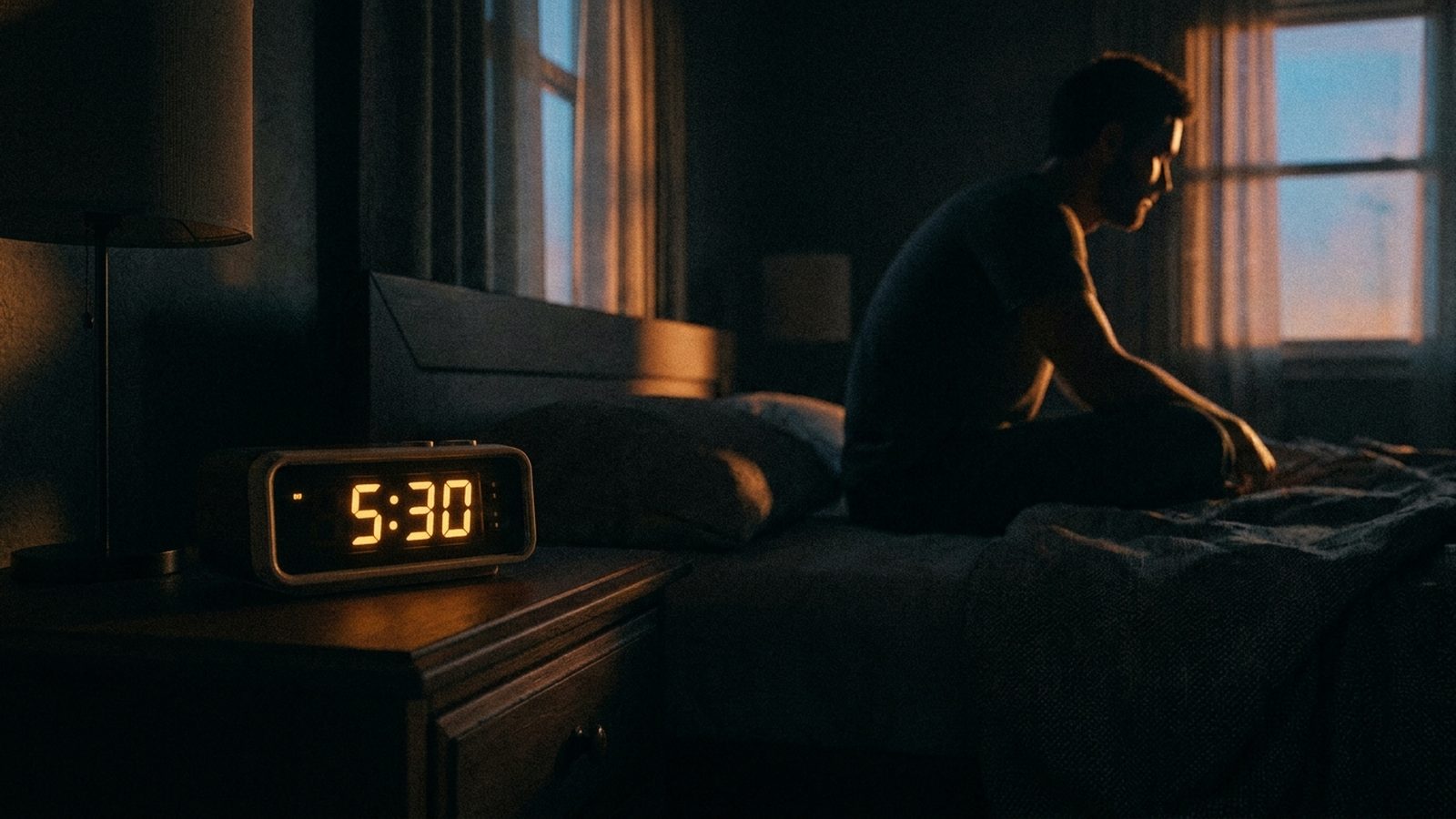
Key takeaways
- The morning negotiation is not weak willpower, it's a decision happening at the worst possible time, half-asleep, with the lowest-effort option always winning.
- You can't out-argue yourself in the moment. You have to remove the moment: decide the night before, so there's nothing left to negotiate at 5am.
- The fix is making the first move automatic and small enough that debating it costs more energy than just doing it.
the alarm goes off and a version of you shows up that the night-before version never agreed to meet. he's tired, he's warm, and he's got a surprisingly good lawyer. "you worked hard yesterday, you've earned a slow one." "the plan will still be there in twenty minutes." "just today, then back on track tomorrow." you know these lines because you wrote them, in the moment, half-asleep, every single morning. that's the actual problem. you're negotiating a decision that should have already been made.
1. see the negotiation for what it is
it feels like a willpower failure but it's actually a timing failure. you are trying to make a disciplined decision at the exact moment your brain is least equipped to make one: low blood sugar, no daylight, still half in a dream. nobody negotiates well in that state, and the version of you doing the negotiating isn't lazy, he's just answering with whatever's cheapest in that specific fifteen seconds. the fix isn't getting better at winning that argument. it's making sure the argument doesn't get to happen.
2. decide the night before, not the morning of
whatever you want to happen at 5am has to be decided at 9pm, by the version of you with full context, full energy, and an actual stake in the outcome. lay out the clothes. put the shoes by the door. write the one task down. the decision gets made once, by the sharper version of you, and the morning version just has to execute a plan instead of negotiate a new one. you're not relying on morning-you to be strong. you're relying on him to have nothing left to decide.
you can't out-argue a half-asleep version of yourself. you can only make sure there's nothing left for him to argue about.
3. make the first move smaller than the resistance
most mornings aren't lost on the whole routine, they're lost on the first ninety seconds. so shrink those ninety seconds until objecting to them is more effort than doing them. don't negotiate "should i work out today," just stand up and put your feet on the floor. don't negotiate the whole cold shower, just turn the handle. the full habit can follow once you're moving. it's much harder to talk yourself out of a step you've already taken than one you're still deciding on.
4. treat the negotiation itself as the enemy, not the tiredness
you will always feel some resistance in the morning, that never fully goes away and chasing a version of yourself who feels like getting up is a trap. the goal isn't to eliminate the tiredness, it's to stop giving the tiredness a vote. notice the negotiation starting, "maybe just five more minutes," and treat that sentence itself as the signal to move, not a reasonable position to consider. the men who look disciplined in the morning aren't the ones who never feel resistance. they're the ones who stopped debating it.
how this compounds
every morning you skip the negotiation and just move is one more day your brain learns there's no debate to be had. after a few weeks the argument gets shorter because it stops working. it's not that you get tougher, it's that the negotiation runs out of leverage once it never wins. that's the actual goal here, not a stronger you at 5am, just a quieter morning with nothing left to argue about.
Want the mornings decided for you in advance?
The 75-day system gives you the exact first move every morning, so there's nothing left to negotiate when the alarm goes off.